Goal: To encourage sustainable initiatives and reduce waste on campus at Mount Royal University.
1. Empathize
Every design begins with empathy. Empathizing is a fundamental step in the design process as it helps me understand the needs, thoughts, emotions and motivations of who I am designing for. It helps bridge the gap between designers and users, leading to better user experiences, effective problem-solving and more ethical and user-centered design.
I used the AEIOU observational framework (Activities, Environments, Interactions, Objects, Users) to learn about students connected to this issue. From my observations, I noticed that there was an excess of plastic and compostable waste going into landfill bins.
To further understand my users, I conducted structured interviews with students on campus. From these interviews, I discovered that students felt they would be more motivated to engage in these kinds of initiatives if there was a student rewards program offered.
2. Define
Defining helps me set clear boundaries and objectives. It sets the stage for successful execution and well-defined goals.
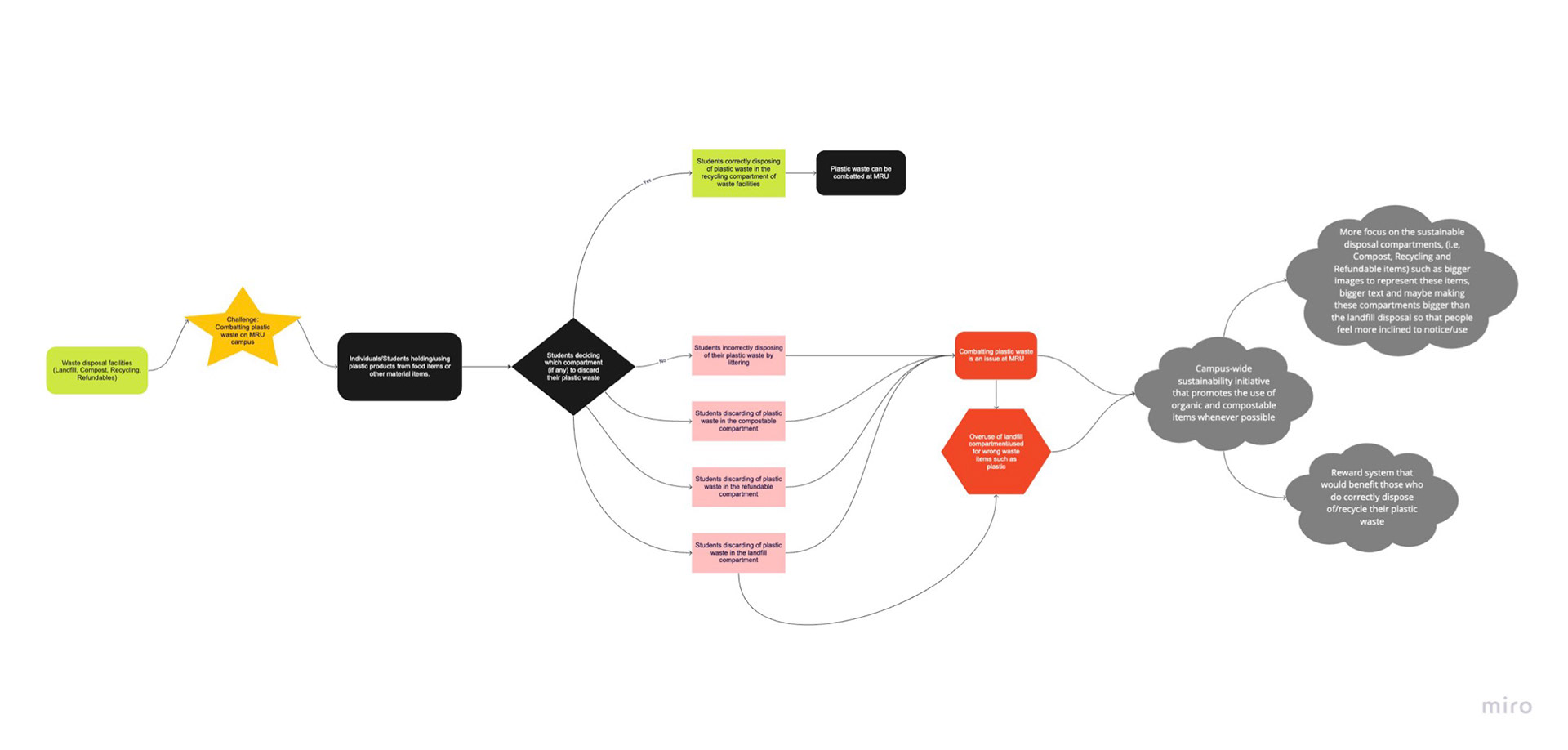
I developed a flowchart to synthesize the research collected. From this, I was able to gain deeper insight into the process of the users and identify pain points.
3. Ideate
Ideation fosters innovation and encourages creative solutions, which is essential for producing effective designs.
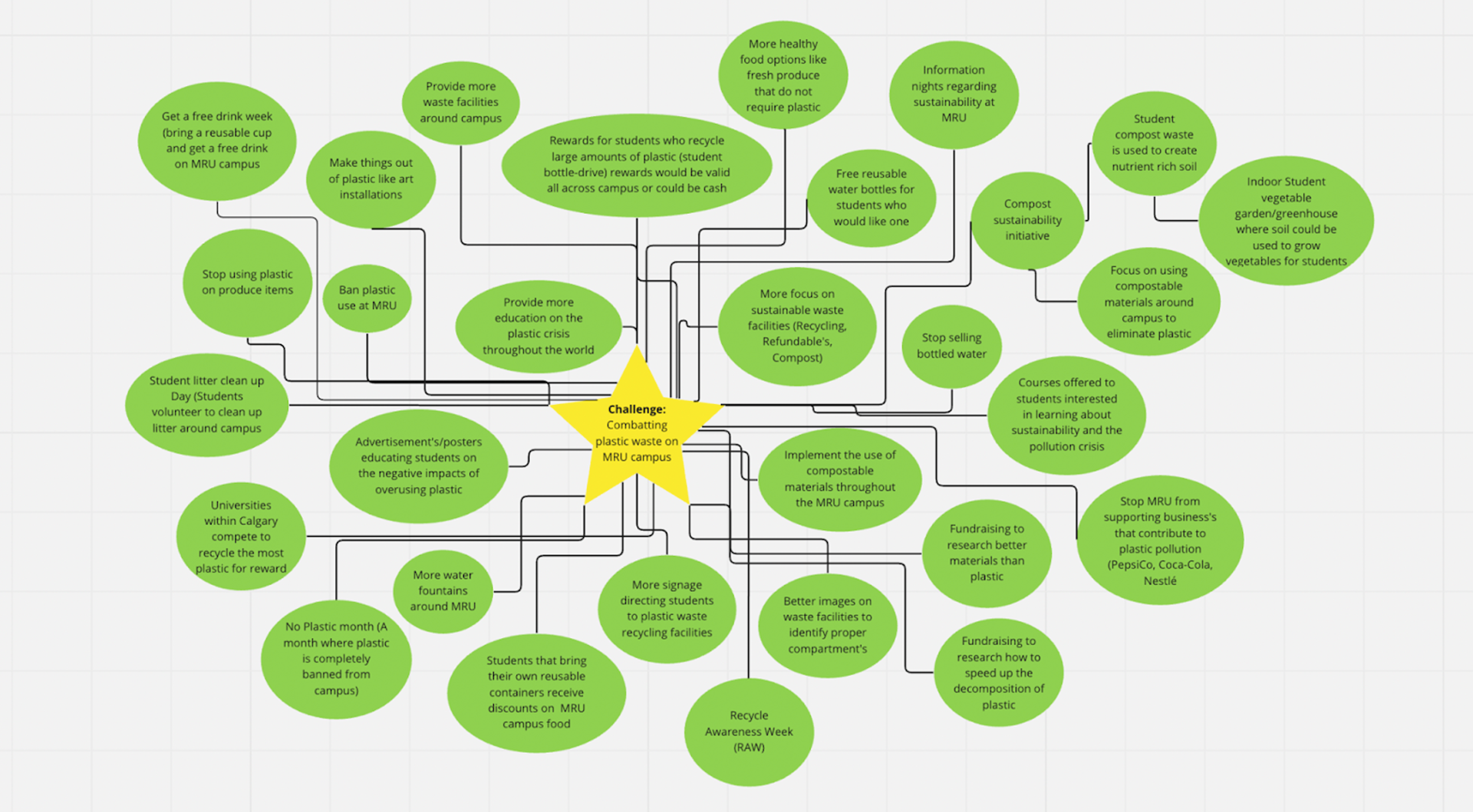
I used a mind map to ideate solutions.
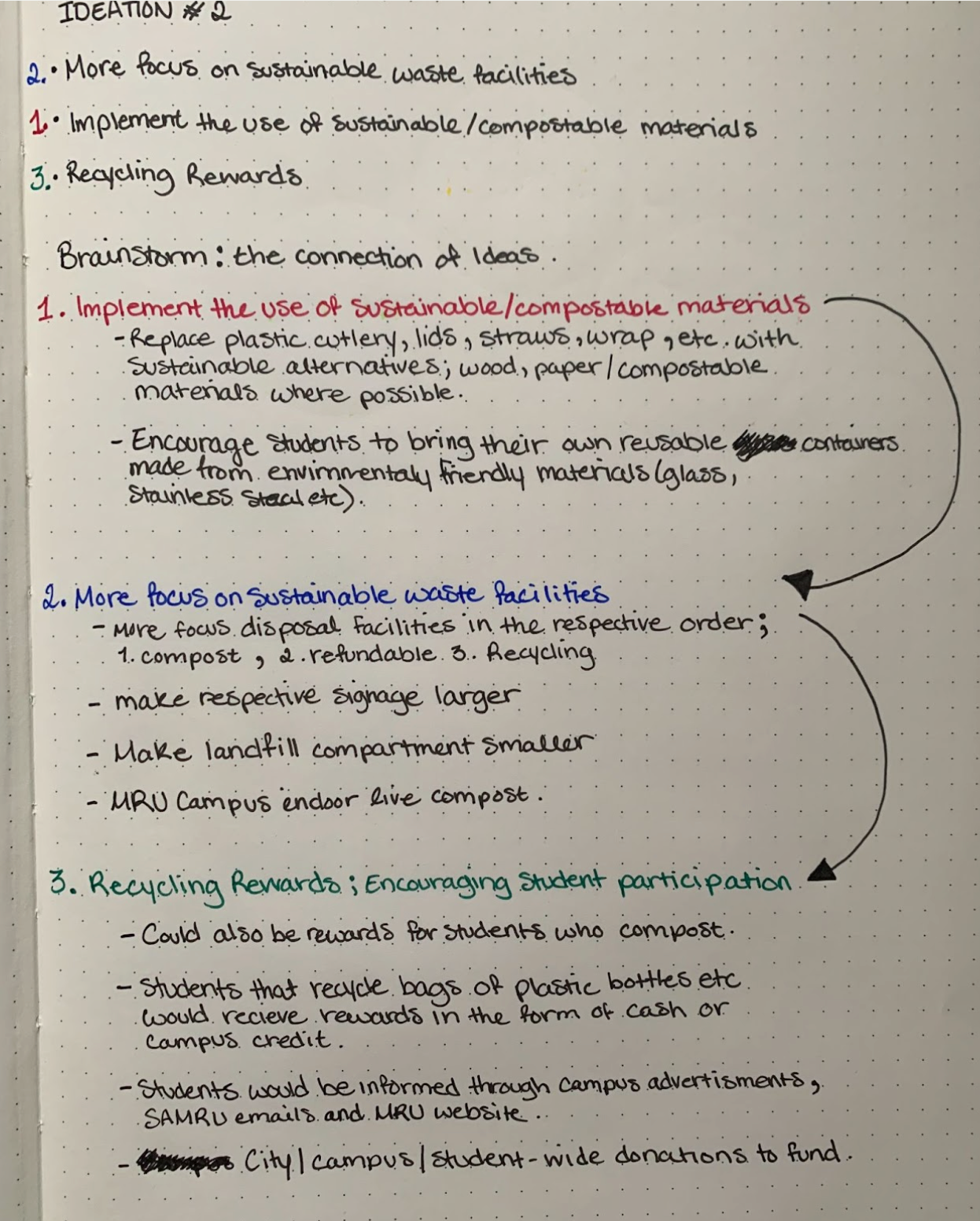
After carefully evaluating my ideation mindmap, I was able to identify three effective solutions and understand how each built upon the previous one.
The first idea entails implementing the use of sustainable/biodegradable materials. This would be accomplished by reducing and replacing plastics with sustainable alternatives. The second idea involves expanding the accessibility of compost and recycling facilities. The third idea would encourage students to participate in these initiatives by implementing incentives for contributing students.
Students would need to be well informed of the programs taking place in order for these ideas to become actions, which is why I would provide more information and updates through campus ads, the university website, and in the form of an application where students could access all of this in one spot.
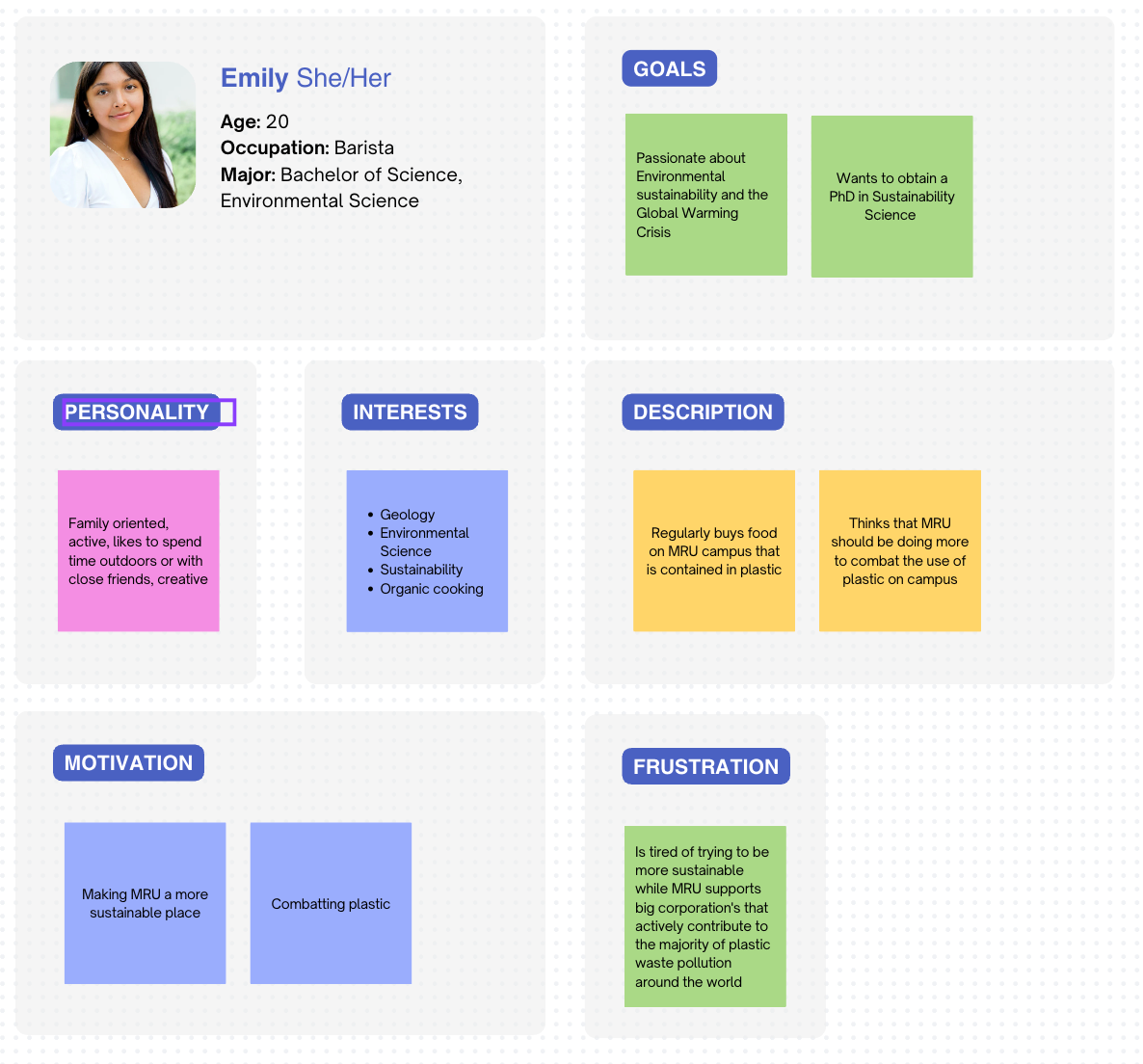
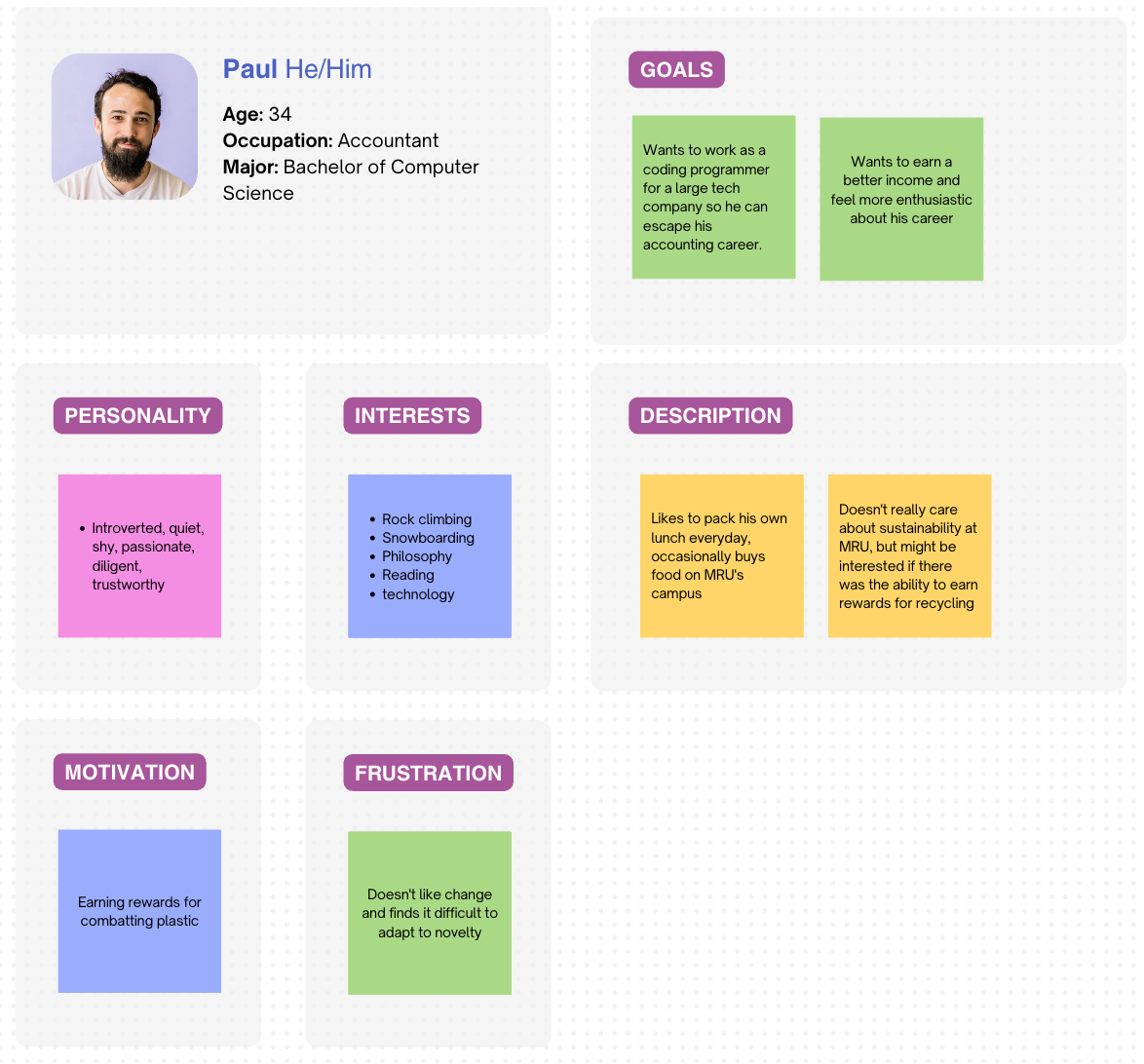
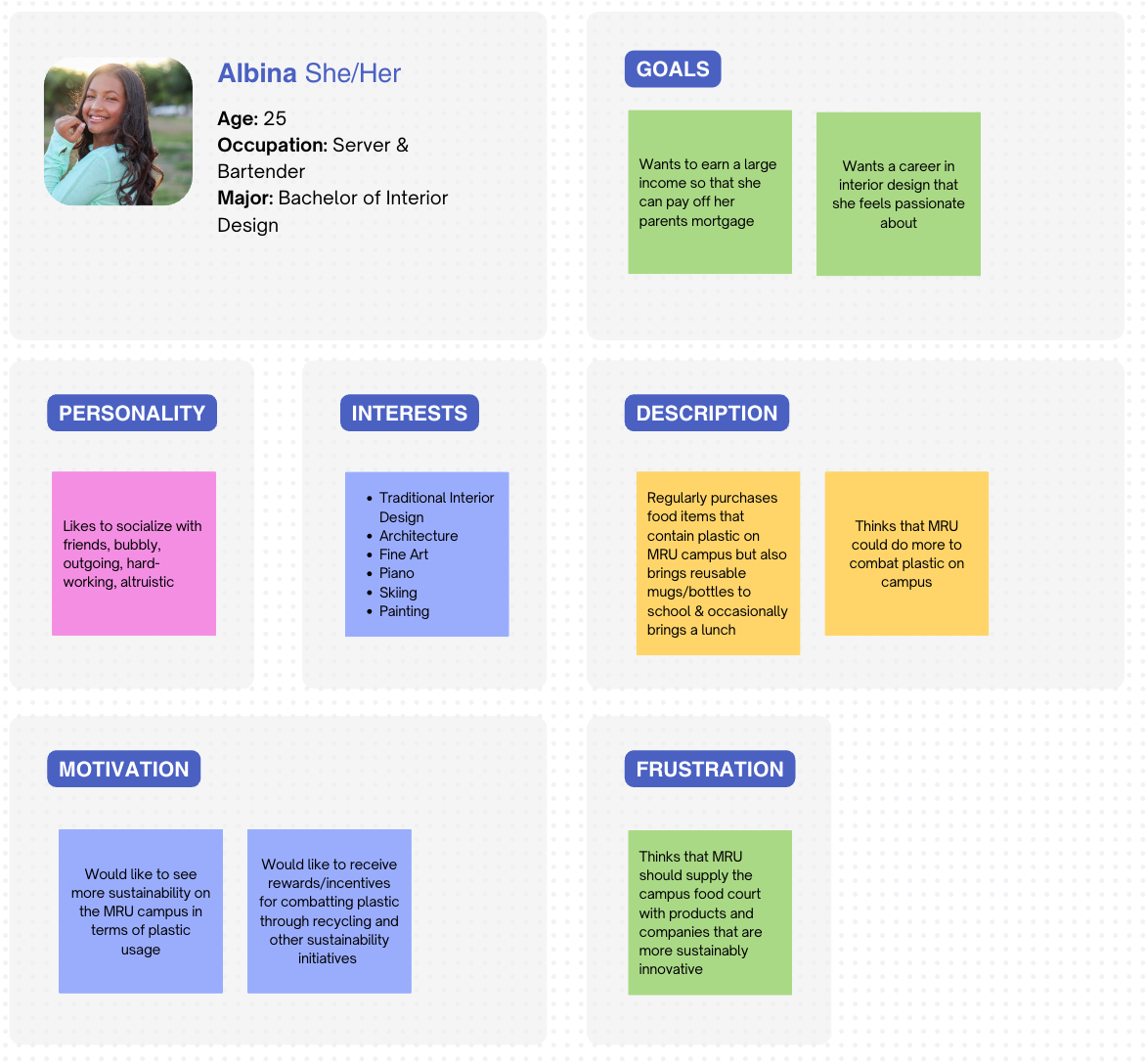
I developed a series of user personas to represent my audience and created a storyboard to display my ideas in action.
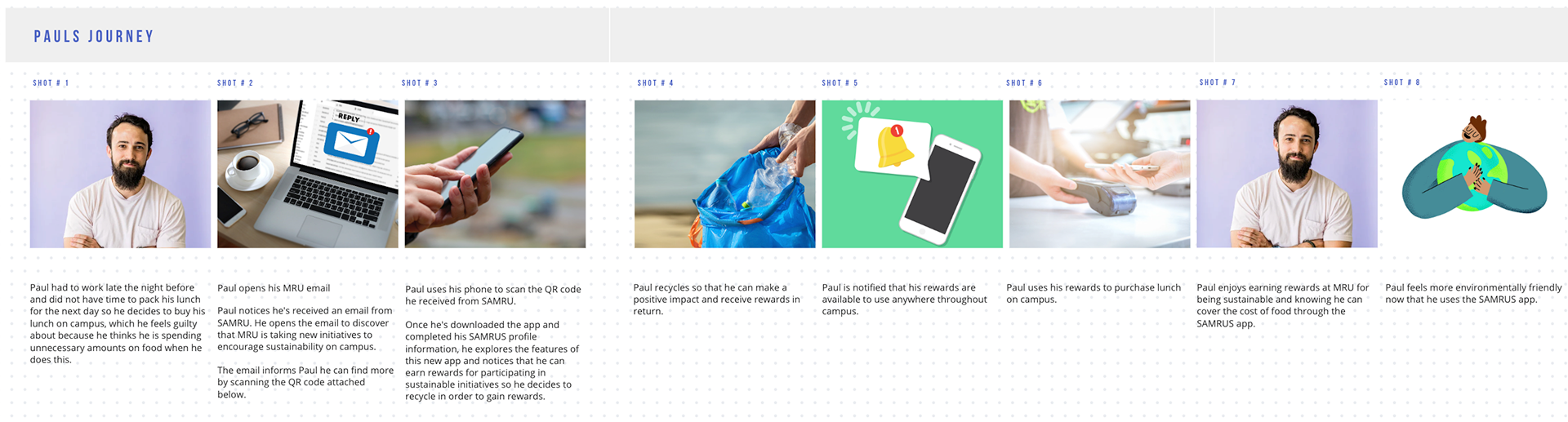
My storyboard focuses on Paul's journey, Paul is an accountant and a mature university student. Paul opens an email regarding the new app and reads that students have the opportunity to receive student rewards for participating in sustainability initiatives. Paul decides to donate his recycling on campus so he can receive points and use them later to buy himself food on campus.
4. Prototype
Prototyping allows me to see a tangible, testable representation of a design before investing in the final product. I created a prototype to gather user feedback and allow users to be involved in shaping the final product.
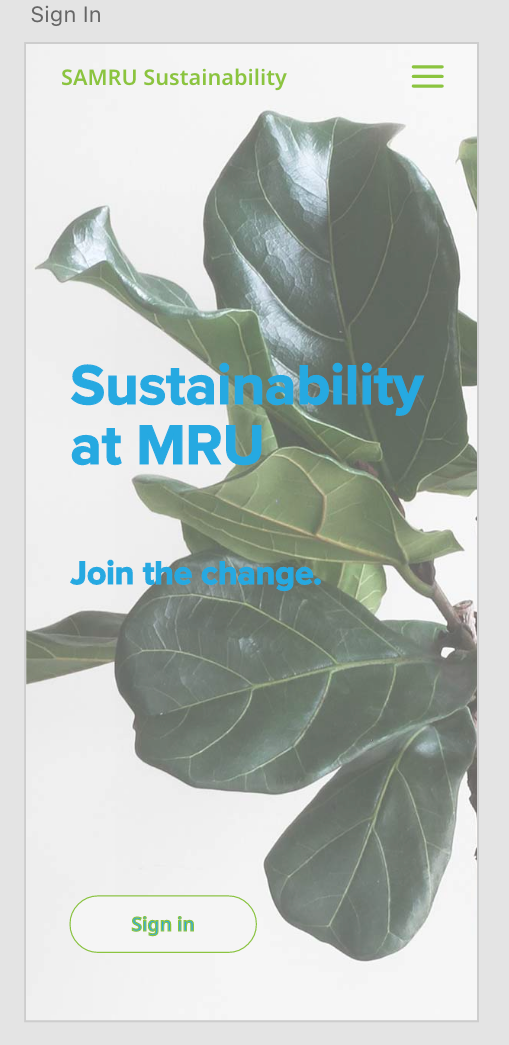
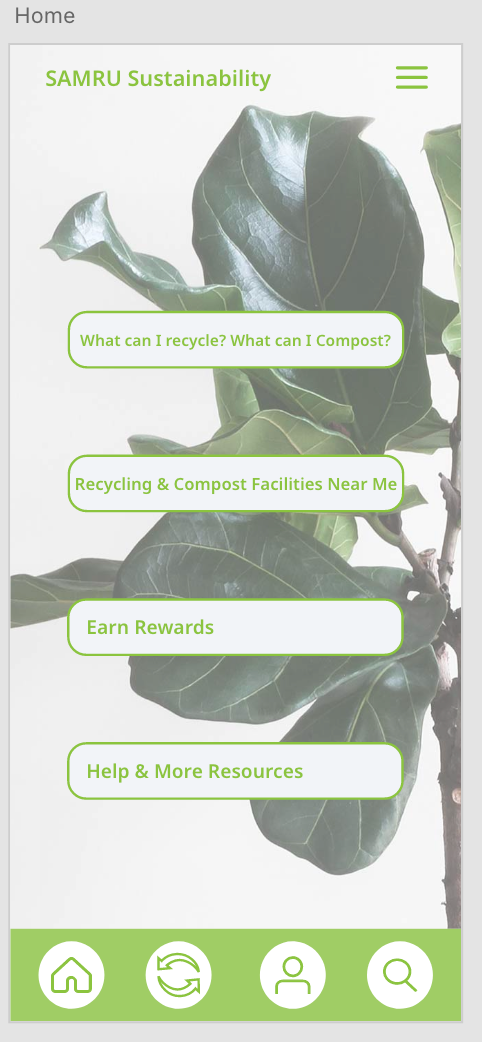
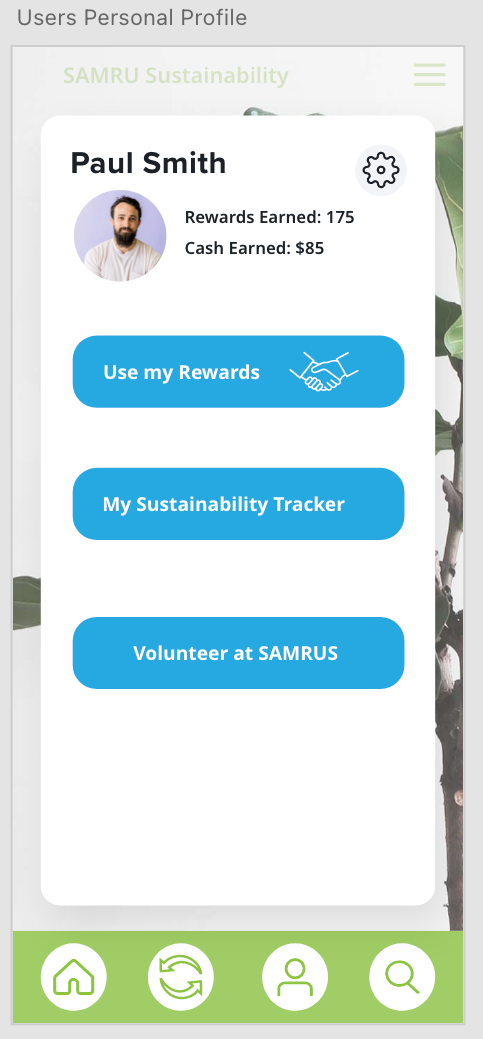
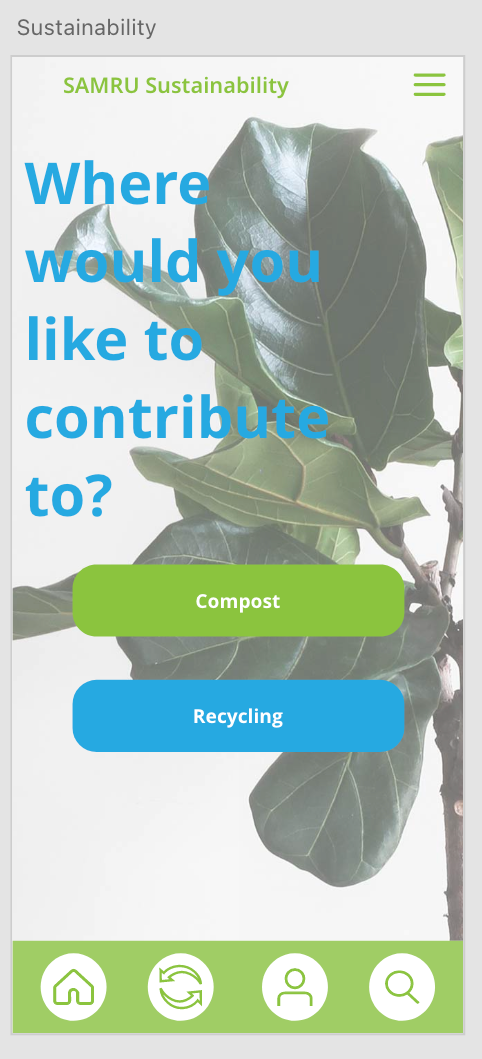

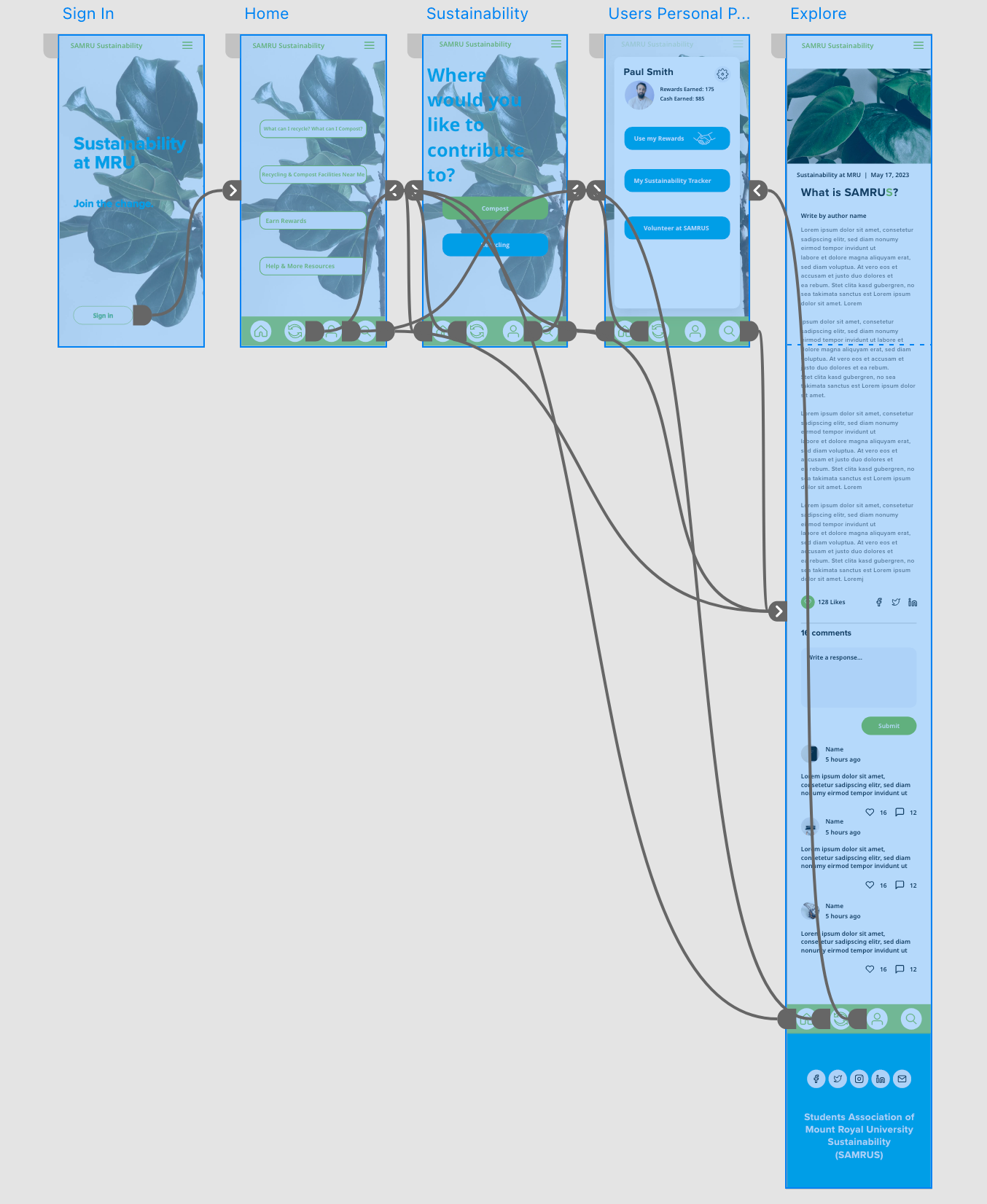
I began prototyping an application in Adobe XD intended to encourage student sustainability initiatives.
5. Test
Testing refines the final product based on user feedback, resulting in effective, user-centered solutions.
I conducted user testing on my prototype by having students interact with the app and subsequently participate in structured interviews. This approach provided valuable insights into the students' perspectives on the app's usability and its potential to encourage sustainable practices.
The user-testing results revealed a positive sentiment among students regarding the sustainability application. Specifically, they expressed enthusiasm for an app that offered benefits for their active participation in sustainable initiatives.